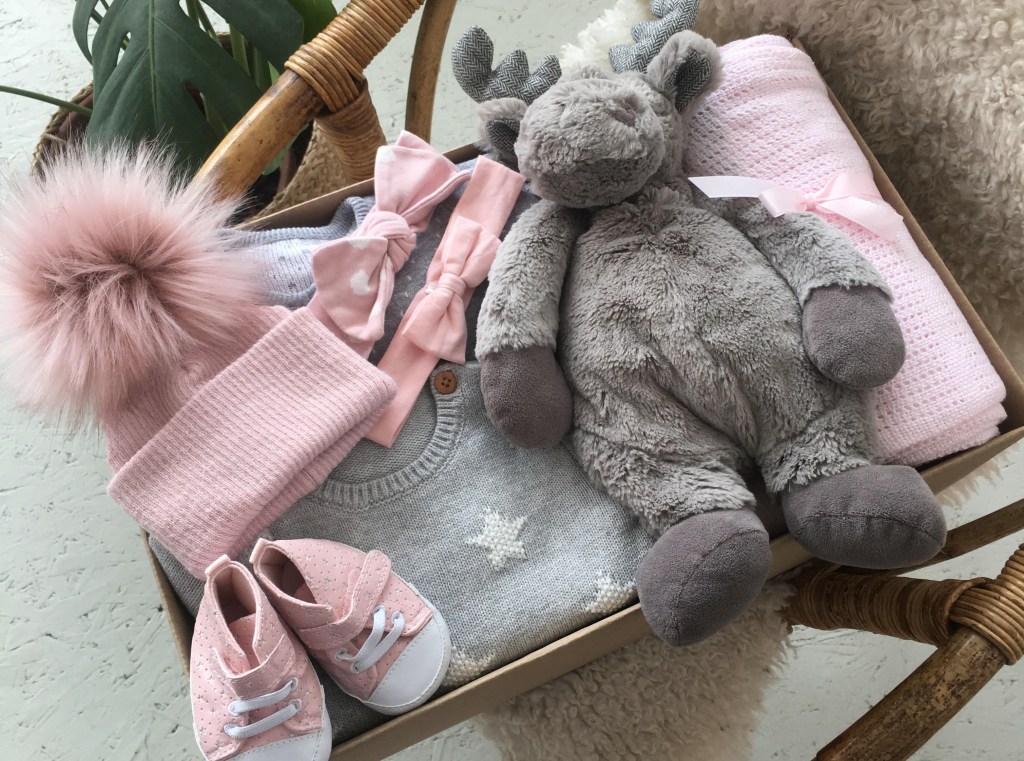
Mama to Mama is one of at least 400 baby banks in the UK – organisations that give equipment, clothes and other essentials, usually donated secondhand, to people struggling with money. They are increasingly in demand, which is a whole other issue. But one interesting thing about Mama to Mama, whose founder I interviewed recently, is its focus on aesthetics. “We don’t take anything that’s stained. We steam-clean the prams. We don’t put anything in plastic bags. Everything’s in a beautiful paper bag,” Jayne Furniss told me.
Jayne is a former interior designer, so it’s not surprising that appearances matter to her. How something looks can affect how you feel, as she pointed out. In the case of hand-me-downs from your neighbours, when you’re already stressed about providing for your child, and maybe comparing yourself to other parents around you, the message that comes with those items can be significant.
“We want the family to feel like it’s a gift,” Jayne said. “If you give a mum a care package in a plastic bag, even if it’s nice stuff, you’re kind of saying it’s charity… we don’t do that. We put them in beautiful boxes and paper bags. It’s about self-worth. It’s not, ‘well, you can have that because that’s what you need’. It’s: ‘that’s what you deserve’”.
Mama to Mama is a charity, and was set up to support the people who most need help. But Jayne’s words reflect a common feeling: that charity as a concept is about the haves giving to the have-nots; and that being on the receiving end of charity generally doesn’t feel good.
There’s a really good illustration of turning this on its head – the case of a homeless centre in New York, as described by the writer Julie Salamon. During the 9/11 terror attacks, residents of this centre – usually the ones receiving help – suddenly became the helpers, offering water and space to sit for those fleeing the site of the attacks. Some days later, a woman they’d helped brought cookies as a thank you. The gift itself wasn’t much different, nor more valuable in monetary terms, to many previous donations. But, because this one was brought as a thank you, and not as pity, “the distinction was huge”.
This shouldn’t be news to us. Two thousand years ago the philosopher Seneca wrote that the gift itself is neutral; it’s the attitude with which it’s given that counts, “since the gift is not the thing done or given, but lies in the heart of the one who does or gives”. We know this instinctively when someone’s birthday is coming up. It’s the ritual of gift wrap and ribbons, the symbolism of offering something on that particular occasion that makes it meaningful – not so much the fact that we’re buying something that our friend might just as easily buy for themselves.
Talking to Jayne reminded me of the social enterprise Madlug, although it’s a bit different. Madlug sells branded backpacks and bags, with profits funding travel bags for young people in care who would otherwise end up moving their things from one temporary home to the next in a plastic bag. They describe this as being about “dignity, because no child should carry their life in a bin bag”. From the outside, it can seem odd to prioritise non-essentials when there’s so much need for the basics. Then again, how could a sense of self-worth ever be anything but essential?
Photo courtesy of Mama to Mama


Leave a Reply