In the opera house in Manaus, Brazil there’s an organ, gifted from the US in the early 1990s. The instrument sits in the lobby, cordoned off and unused – because no-one in Manaus knows how to either play or maintain it.
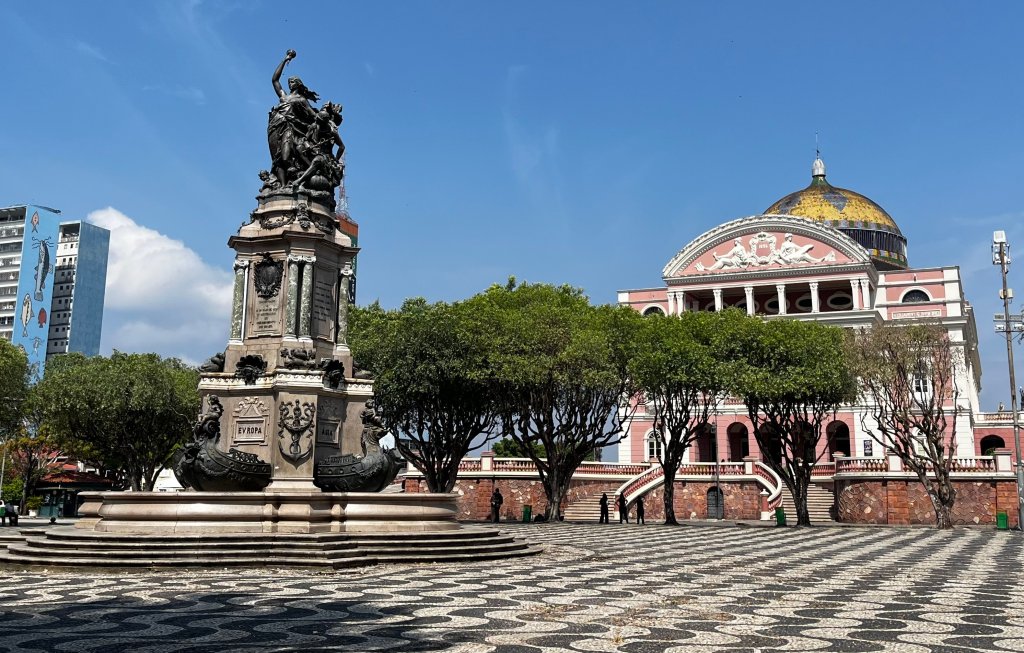
Maybe you could forgive the Americans for their poor choice of gift. Because, although we’re in the middle of the Amazon rainforest, this is a fully functioning venue (pictured below), putting on around 250 performances a year. Decades after Brazilian independence, Manaus claimed to be the “Paris of the tropics”: here, the wealthy adopted the fashion, culture and even language of the French. And at the heart of this high society, was the opera house or Teatro Amazonas, inaugurated in 1896. Audiences would have marvelled at the lighting in what was the first electrified theatre in the country; in the unforgiving humidity, in their fashionable corsets and hats and furs, they must have sweated buckets.
It was the rubber boom that once made this the richest state in Brazil, but that era is long past. Many years of decline followed; then, in the late 1960s, the government sought to reverse this by designating Manaus a free trade zone, though their vision has not quite materialised. There is huge wealth inequality across Brazil, but the opera house at least has found a new role: as a tourist attraction and as a place making the arts accessible to all, since around half of all shows are free to attend, thanks to public funding. (Although none of them feature organ music.)
More meaningful gifts
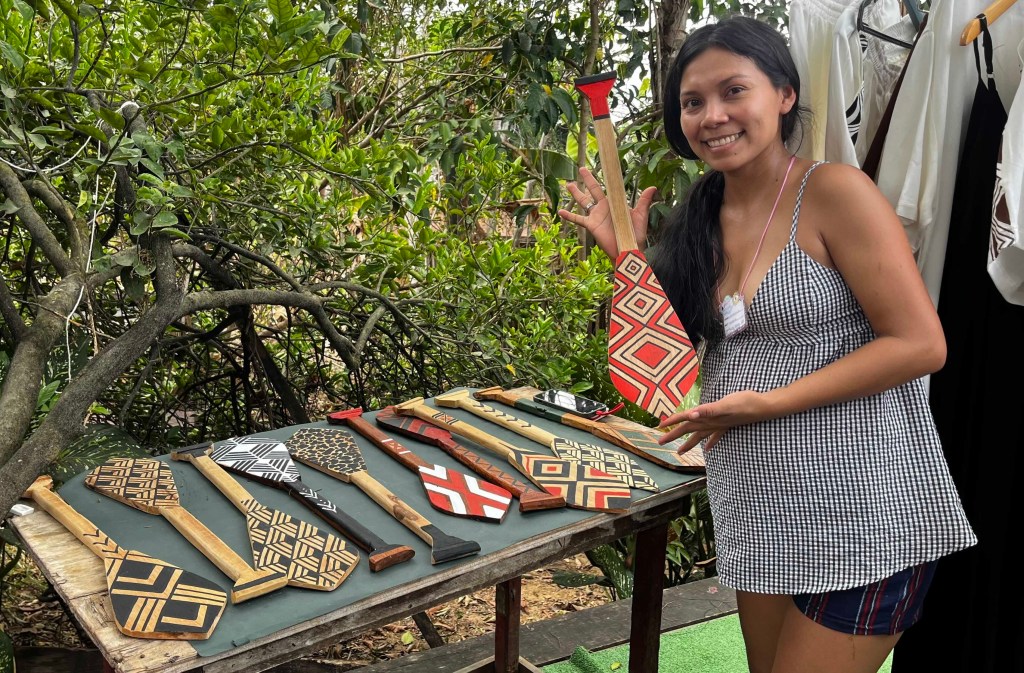
Podaali means ‘to give without expectation of return’, as well as ‘celebration’ and ‘reciprocity’, in the Baniwa language, as I learned on a visit to one of the Podaali Fund’s grantees on the outskirts of Manaus. This is the first indigenous-created and -led grant fund in Brazil that reaches across the Amazon region, and though the idea sounds simple — support indigenous people and protect the rainforest by giving money to those communities, for them to decide together how to distribute it — it’s seen as pretty groundbreaking, because this just hasn’t happened before. So far, the fund has raised nearly US$5m from various international donors. But the fund’s coordinators say much more is needed, and fast. After one recent call for applications they were astonished to get 300 requests, when they could only fund a few dozen.
My visit was part of the Latimpacto conference, held in Manaus earlier this month. The conference is mainly for impact investors, philanthropists and other supporters of enterprises and social projects, but I spoke to quite a few people on the other side — people working for NGOs or intermediaries who mentioned frustrations with finding willing, flexible funders. It’s the same frustration you hear in Europe: funders only want to support specific projects for a limited time, rarely covering an NGO’s core costs or funding them for long enough to give a little breathing space before fundraising has to begin again.
Bruno Girardi, whose role at Brazil-based Sitawi includes finding philanthropists to support cooperatives, put it succinctly. “There’s a lot of hands for very little change,” he told me. “Busking is exhausting.” He’s also worried that Brazilians seem to be giving less to charity than in previous years. When I asked Bruno what might change this, his immediate answer was to quote Bob Dylan – only once people realise that the water is rising upon them and that they, too, will soon “be drenched to the bone”.
There are other less dramatic drivers, of course. Philanthropy nerds in LatAm are concerned that individual giving in the region is relatively low compared with Asia and Africa, and many of them attended a 90-minute, come-up-with-solutions session at the conference to explore what needs to happen. The proposed ideas were varied (tax incentives, better storytelling, clearer demonstration of impact, more professional fundraising, more engagement with wealthy families, etc, etc.). There appeared to be little consensus on which of these was most important, probably because several things need to happen alongside each other. Creating a culture of giving – of giving the things that people actually need – doesn’t happen overnight.
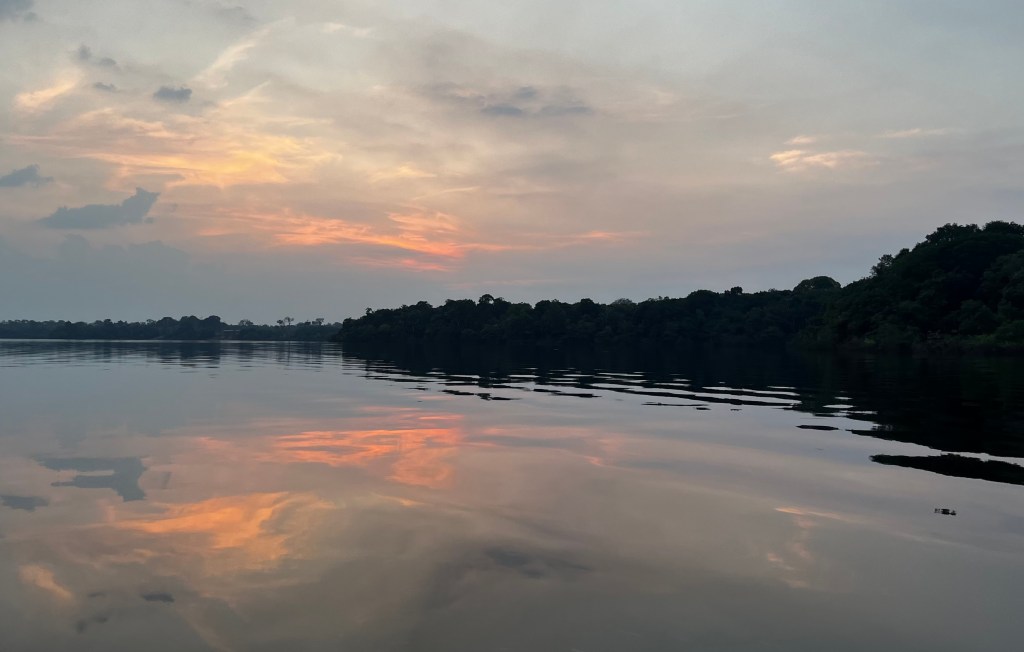
Photos: Women’s craft group Derequine Atelier, which received money from Podaali Fund; the opera house in Manaus; sunset on River Juma in the Amazon (photos by Anna Patton)


Leave a comment