In 2011 – way before we all began outsourcing ideas to AI – the researcher Kyung Hee Kim discovered we were experiencing a creativity crisis. While IQ had been rising since the 1990s, creative thinking had “significantly decreased”, according to the findings.
Loss of imagination still matters. Not least, according to the author, artist and environmentalist Rob Hopkins, because we need to imagine that things around us can look different if we actually want them to change.
That may sound obvious, but it can feel hard to picture something really different. Rob, who was speaking at the recent Festival of Optimism here in Margate, asked the audience to spend a few minutes imagining the best possible version of our local area, say 10 years from now, and then discuss it with the person next to us. I pictured lots of plant life, the sound of bees and birds, and children playing outside. My neighbour had much the same vision. So… not exactly radical.
“Any useful statement about the future should at first seem ridiculous,” said the futurist Jim Dator. There was probably nothing quite as ridiculous, pre-1969, as the idea of landing on the moon – and yet storytellers of all kinds embraced this dream for decades beforehand. There were Hollywood movies, Mickey Mouse episodes and Tintin books about lunar adventures. There were Disneyland rides. There were ‘paper moon booths’, popular at carnivals and fairs in the 1920s-30s, where you could get your photo taken while sitting on a giant, smiley-faced crescent. All this was a kind of rehearsal, Rob explained: we were building the “collective longing” for a new possibility, so that when JFK announced that Americans would aim for the moon, they believed him, and they backed him.
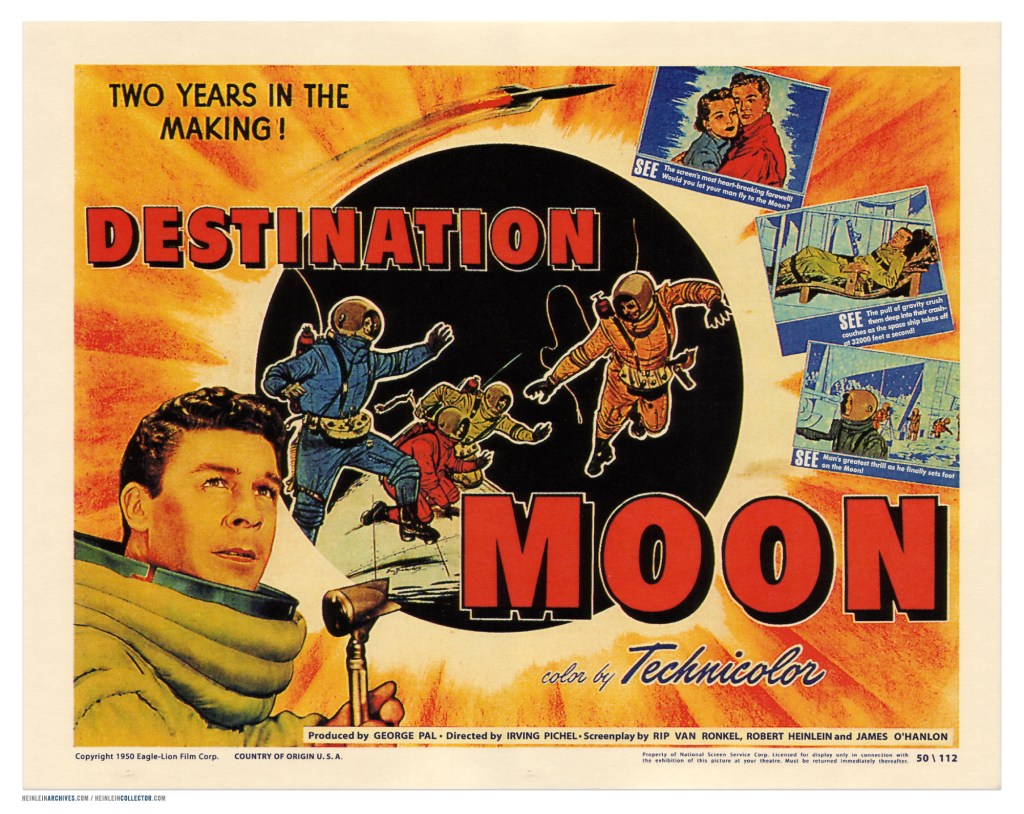
Trips to the moon took place in fictional worlds first (“Destination Moon” lobby card by Mark Bult, CC BY-NC-ND 2.0)
Glass half-full
Could we be similarly ambitious/ridiculous when it comes to imagining a future beyond fossil fuels?
It’s tempting to entertain the idea briefly, then return to something more pragmatic – or worse, give up. Maybe because some of us have become so “deeply attached to despair” that it has become a habit, a reflex – a sort of “teddy bear” that we cling to, as Rebecca Solnit puts it. Maybe because, as Stanford psychology professor Jamil Zaki explains, we’ve created a culture that values cynicism – that assumes distrust is the safer option and that cynicism is the same as being clever. In fact, that’s not the case: he cites studies of over 200,000 people in 30 countries, in which cynics scored lower on tasks that measure cognitive ability, problem-solving and mathematical skill; they also did worse than non-cynics when it came to identifying liars. “In other words, cynicism looks smart, but it isn’t,” Zaki writes.
Meanwhile, optimism is good for you: optimists have higher levels of wellbeing and resilience, have better relationships, and they do better academically, according to Claire Inkster, speaking at the Festival of Optimism. The good news for any glass-half-empty types is that optimism isn’t (only) a trait you’re born with – with practice, the brain can create new pathways to shift how it responds to situations. Here, I agree with Zaki and others that part of this is also about changing your news diet: proactively balancing out the constant flow of negative headlines, by seeking out constructive or solutions-focused news too.
Storytellers have a job to do, too. Solitaire Townsend, an expert in sustainability communications, recently highlighted a widespread “climate imagination problem”. 10-year-olds can reel off all the worst effects of climate change, but ask them what we can do about it, and even their vision seems to shrink to little more than recycling bins, she writes. The problem lies in the stories we’re sharing: an “enormous cultural library of apocalyptic narratives” on the one hand, and surprisingly few “fables that foreshadow a better ending” on the other.
Stop being an individual
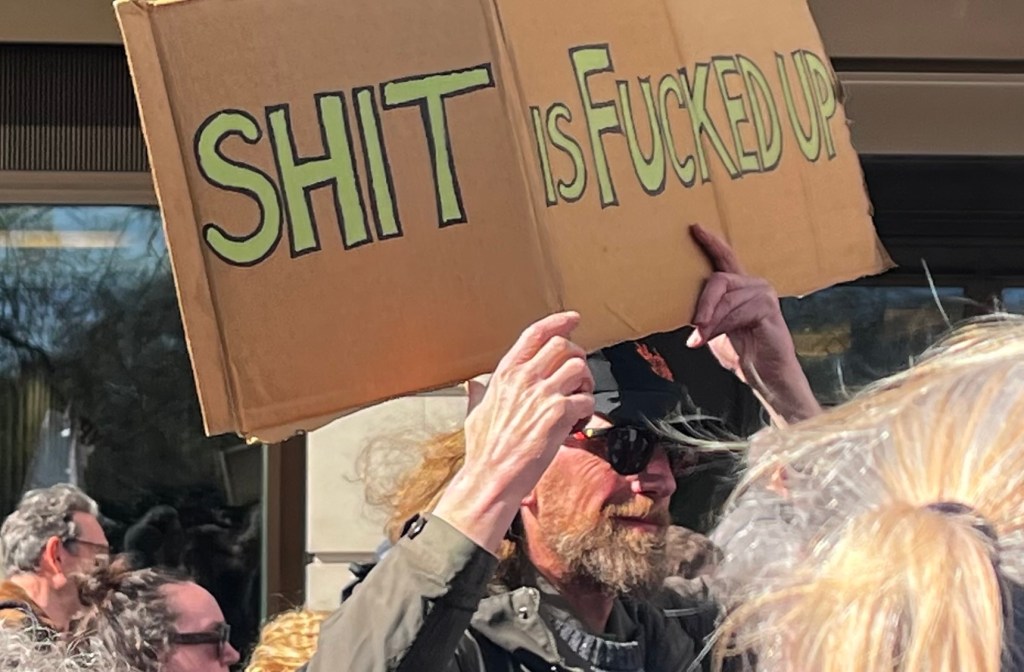
Knowing things are bad while hoping they get better: a protestor marches against the far right, London 2026
Zaki distinguishes between “false optimism” – believing everything will be just fine – and “hope”, knowing that things could improve. Activists know this all too well: as the psychotherapists Paul Hoggett and Rosemary Randall wrote a decade ago, “any movement that seeks to make things better in the world has to manage despair”. Sustaining activism over time means somehow holding both pessimism and optimism together.
Amy Zing, founder of Margate Pride, describes optimism as being not a feeling that you wait for, but a conscious decision you make, even when things are tough. For those of us who want something to change – whether we see ourselves as activists or not – there is a good place to start: close to home. Because it turns out that even the most cynical people have faith in those who live nearby: just 6% of people in the Philippines trust “people”, but more than half trust their neighbours, according to Zaki. “Cynicism has a neighbourhood-shaped hole punched through it,” he writes.
Bill McKibben, an activist who first highlighted global warming way back in the 1980s, is often asked what individuals can do about climate change. His response: stop being an individual. “The individual action that actually matters is not being an individual. It’s joining together with other people in groups large enough to change the political dynamic,” he has said.
Imagining a different future, together, even if it’s hard, seems like a good place to start.


Leave a Reply