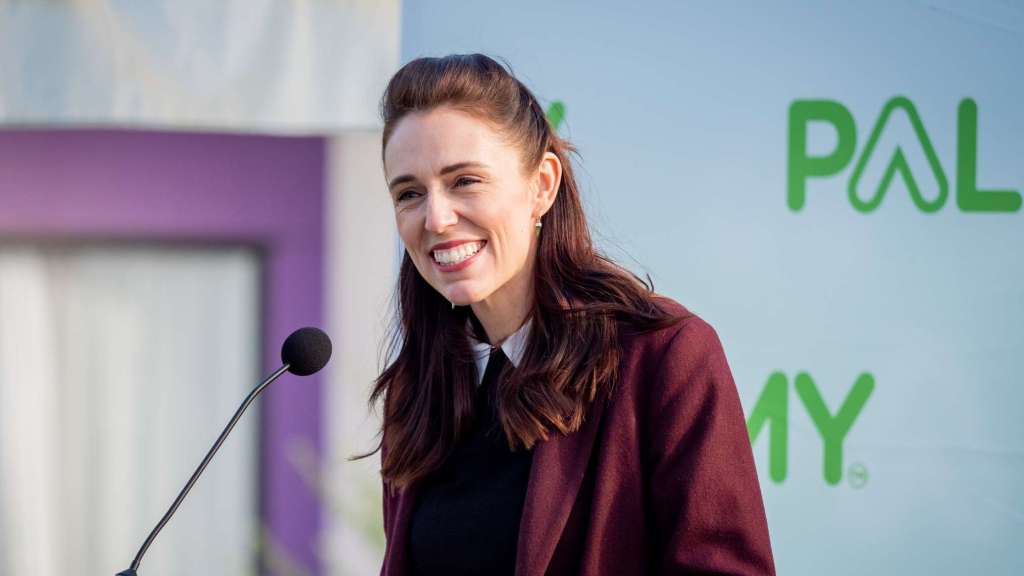
Jacinda Ardern, the former New Zealand prime minister, calls herself a “do-gooder”. It’s an unusual choice: the term is mostly an insult, and she was apparently mocked at school for her do-gooding.
Ardern can perhaps pull it off – she was an unconventional PM, and for years has been arguing that kindness can co-exist with power. The rest of us, less so. At best, “do-gooder” suggests someone who’s well-intentioned but uninformed, or maybe lacking in some skill (as in, describing social entrepreneurs as having the heart of a do-gooder but the mind of a businessperson). At worst, it’s an interfering busybody who thinks they’re better than you.
There’s a theory in psychology that explains this negative feeling. “Do-gooder derogation” is the “putting down of morally motivated others”, and it happens because we find those who act “too generously” off-putting. Even if that generosity actually benefits the wider social group, the altruist is still punished in some way. For some researchers, this is a logical strategy to avoid looking bad, because the do-gooder has set an unacceptably high benchmark. Others suggest that “upward comparisons” can prompt negative feelings – these ultimately damage relationships, presumably with negative effects on the wider social group.
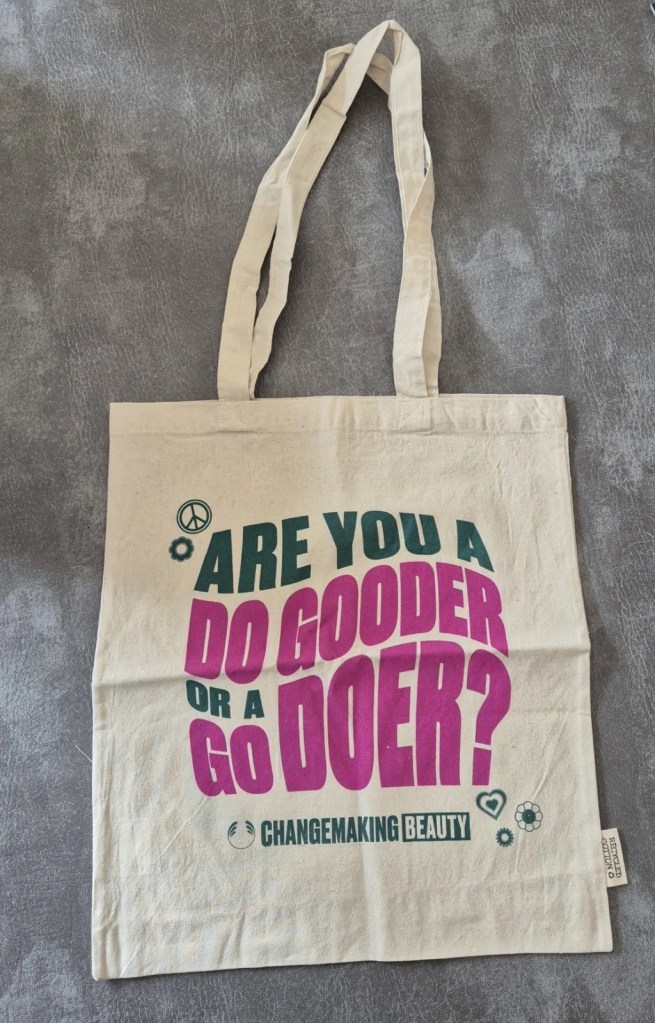
A “go-doer” is better than a do-gooder, according to The Body Shop (photo by dark_phoenix_xox on ebay)
This idea came up in a recent conversation I had with a nondirected kidney donor – someone who gave one of his kidneys to a stranger. He has been advocating for more recognition of and rights for such donors, and believes this has been difficult partly because of a “natural buffer, or resistance” towards people doing things for moral reasons. He suggested a comparison with diet: meat-eaters sometimes find vegetarians’ supposed superiority irritating, but he (also a meat-eater) didn’t have that experience. “I’d be a better person if I were vegetarian… that’s okay, I do other good things, I feel fine. But I think if you feel less confidence in your own moral position, then implicitly, it’s like: ‘Well, wait, should I be donating a kidney? Should I be vegetarian?’”.
Or, as philanthropy professor Beth Breeze puts it, “when our self-image is secure, there is no threat [from upward comparisons] to our sense of self”.
Interestingly, talking about generosity doesn’t always put people off – it can also normalise giving, and prompt others to do the same. That’s evident with nondirected organ donation: many donors say their decision was initially triggered by hearing someone else’s story. It also happens with monetary gifts, which is why charities really want you to tell your friends about your donation. Unfortunately, most of us, consciously or not, are aware of do-gooder derogation. Research shows that people expect to feel “substantially worse” if they post about their donations on social media, compared with telling a friend or not sharing at all. So do-gooders face a dilemma: talking about their gifts might influence others to give, but it might also make themselves feel worse.
Reclaiming it
Ardern isn’t the only high-profile name reclaiming the “do-gooder” label. The provocative Dutch writer Rutger Bregman – who went viral when he bluntly asked the Davos elite why no one was talking about paying tax – has a newish project, the School of Moral Ambition. This aims to create “an international movement of ambitious do-gooders”, and it’s had plenty of publicity and funding – though it remains to be seen if that shifts perceptions. Interestingly, Bregman says he experienced what you might consider the opposite of do-gooder derogation: writing about heroes of the past, he started to develop “moral envy” of the people who were really “in the arena” – those protesting, leading or pioneering change.
Could the idea of “moral envy” begin to replace widespread dislike of do-gooders? I’m not so sure…
Top photo by Palmerston North City Council (CC-BY-4.0)
 How can we help

Leave a comment