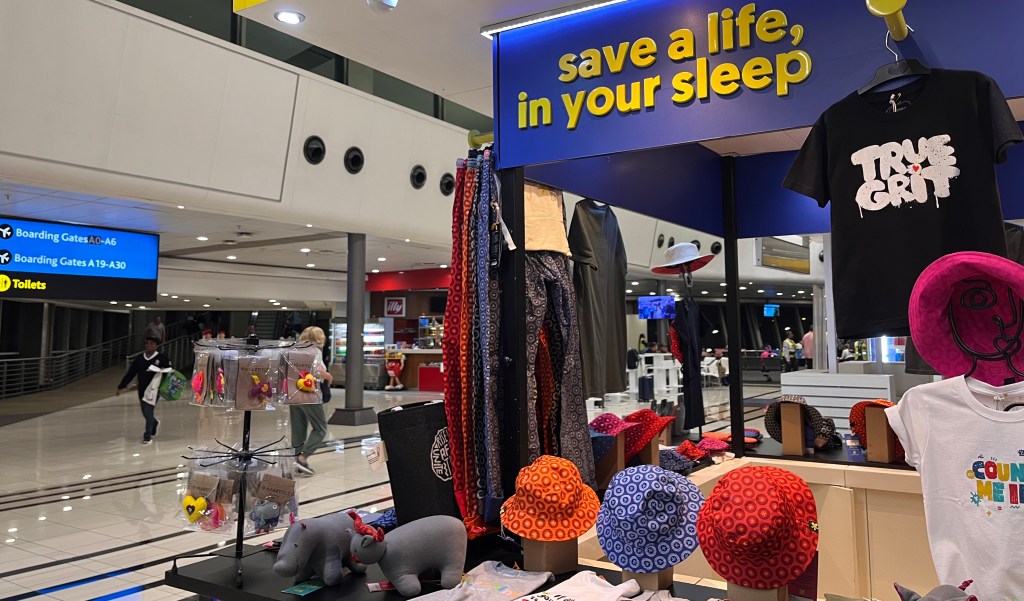
What happens when giving seems a little too easy?
“Save a life, in your sleep”, said the sign. Buy a pair of pyjamas at this shop, the promise was, and your money will help eradicate malaria in southern Africa.
There’s no question that the cause is valid. More than 600,000 people died of the disease in 2021, with young children particularly at risk – yet, with the right intervention, malaria is both preventable and curable. (New vaccines are a massive breakthrough, but are only now being distributed widely, and are far from meeting demand.)
What’s interesting is the “in your sleep” message: here’s a cause you can support with no effort whatsoever – you don’t even need to be conscious (although you do need to have spent some money).
The organisation may well do lots to turn its one-off customers into ongoing supporters. But the message here, at least, positions us as passive consumers first, caring citizens second.
Fundraisers (and salespeople) naturally want to reduce “friction”, making it as smooth as possible for us to complete our donation (or purchase). Many donations happen when “impulse donors respond quickly to feelings of generosity”, and they will give up just as quickly if the process seems too long.
Enter “point-of-sale” donations: when you’re asked to round up your bill at the checkout with the surplus going to a good cause. These take half a second, and don’t make much dent on your bank balance, while raising significant sums overall ($605m in the US alone, in 2020). But they risk feeling a little meaningless. A few weeks ago, I bought a pair of trainers and at the checkout was asked if I wanted to add a pound “for charity”. When I asked which charity it was, the sales assistant didn’t know. That made the sportswear company seem uncommitted; it put me off donating; and meant the charity missed out on an (admittedly small) donation.
In an age of effortless, one-click consumption, many other industries are calling for a return to more friction, not less. A while ago I was a member of Economy of Hours, a time-banking community that allowed freelancers and small companies to trade skills. I remember the director at the time explaining that the goal wasn’t just more skills-sharing, but about building trust within the small business community, which would happen thanks to “more positive friction” (ie, more interaction) between those trading. To take some other examples: great art makes its audience work a little. The “slow travel” movement encourages us to take the longer, more complicated route. And graphic design can be more powerful when it acts as “friction, not oil”, as design supremo Neville Brody said at the recent MagCulture Live event.
In a similar vein, philanthropy researcher Lucy Bernholz warns that frictionless giving can be like junk food: it might achieve its goal in the immediate term, but has little long-term benefit. That’s because for givers, it is “the joy and connection” to a cause that keeps them coming back. It’s very hard to create that connection in just a few seconds.
Bernholz is quite critical about the “commodification of giving”: if it seems too easy to be true, she argues, it probably is. Others are more accommodating. Alfred Vernis of Esade Business School suggests that point-of-sale campaigns have many advantages (plus some disadvantages), and that “more spontaneous forms of solidarity” align with the way younger generations think and behave. But does this kind of giving make it seem too easy? In the framing of Jon Alexander and the New Citizenship Project, if people are only ever treated as transactional consumers, the risk is that they forget what’s possible if they take up a role as engaged citizens. The “consumer story” is all around us, but it really shouldn’t be the only story out there.
 How can we help
Leave a comment