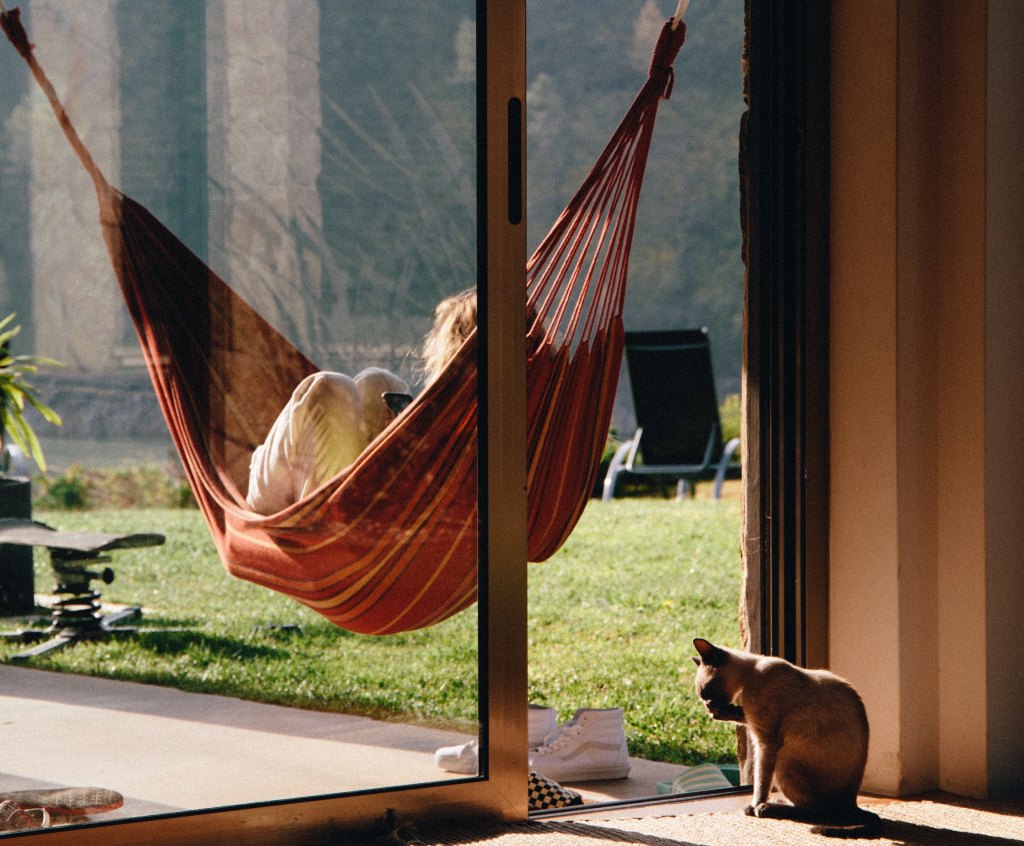
The more you do, the more difference you can make. Or so it seems, in a world that prizes productivity. How could it not be true, when every conference, every campaign, every keynote speaker tells us we must take action, urgently?
It’s counter-intuitive, then, to do less in an effort to make the world a little better. Yet the idea is gaining ground.
Not just because we know that multi-tasking just doesn’t work, or even because we have grasped that burnout is real. It’s also possible that a world in which more of us work a little less would be better for everyone. As one researcher told Grist, carbon emissions and working hours “tend to be pretty strongly positively correlated”. For instance, four-day week experiments showed a reduction in car journeys – one hypothesis is that a less hectic week might encourage people to cycle or take public transport on the days they do work. Meanwhile, a fifth of workers in a UK survey said they would volunteer if they were given an extra day off.
And is resting even a political act? There is increasing acknowledgement of rest as “resistance”: resistance to “the systems telling me to do more”, as artist and activist Tricia Hersey puts it; as a “middle finger” to capitalist oppression, writes academic Shawn A. Ginwright. Rest is not equally accessible. Rather, he explains, it is “yet another form of inequality we rarely talk about and only vaguely understand… rest inequality refers to the gap in the quality, duration and amount of rest people get depending on their status in Western culture”.
Both Ginwright and Hersey frame rest / lack of rest as a racial justice issue, and some funders agree. In Washington state, the BIPOC-ED Coalition last year committed $1.37m to fund sabbaticals for leaders who are black, indigenous or people of colour. As they explain: “Sabbaticals challenge the mindset of scarcity, disrupt the extractive white-supremacist approach to labour, and create a space of nourishment for leaders facing deep exhaustion.”
Funding for respite is not new: many charities make it their mission to give people time and space to recharge. In the UK, Carefree matches vacant hotel rooms with unpaid carers who need a couple of nights away; others provide holidays or short breaks to sick children, their parents, disabled people, retired firefighters.
If we view rest as an issue of (in-)equality, then all of us can help to redress the imbalance. A new book by Sheila Liming describes the simple act of “hanging out” as “radical”. Her words are quoted in this reflection on the rise of the four-day week: “We must work to seize and redistribute the wealth that is time… When we have done that, we must commit to the work of giving it all back to each other.” Ginwright, meanwhile, suggests creating a “radical rest” group among colleagues or friends. This is not a support group, he emphasises, but one that aims to “democratise rest in our society” by considering everything from workplace policies, to shifting our culture, to reframing rest as a basic human right. Rest itself becomes another campaigning battleground.
But exhaustion sends a strong signal. When we’re tired, “we know we can’t carry on in the same way for long,” Matt Carmichael writes, so “in addressing tiredness we address the problem of unsustainability”.
He considers a pivotal moment in the US civil rights movement in this vein: “When Rosa Parks refused to give up her Alabama bus seat she said it was just because she was tired. In recognising and respecting her tiredness more than the rules of her day, and remaining in her seat restfully, she helped to transform her civilisation. Perhaps the key to regenerating our exhausted world is simply to have a good rest.”
Photo by Klara Kulikova on Unsplash
 How can we help
Leave a comment